vLLM 深度解析(二):PagedAttention 核心机制
vLLM 深度解析(二):PagedAttention 核心机制
1. 引言
vLLM 的核心贡献之一,是把操作系统分页思想引入 KV Cache 管理:模型仍然看到逻辑连续的 token 序列,但这些 token 的 K/V 可以分散存放在不同物理块中,再由 block_table 恢复逻辑顺序。这套机制降低了连续预留造成的浪费,也为公共前缀共享和长 Prompt 分段执行提供了统一的地址基础。
自回归生成每前进一步,都要读取历史 token 的 K/V,并把当前 token 的 K/V 追加到缓存。忽略量化、对齐和并行切分后,每个 token 的 KV Cache 大小近似为:
例如,32 层、8 个 KV heads、head_dim=128、BF16 时,每个 token 约占 128 KiB;单个 32K 上下文约占 4 GiB。这个数值只对应上述模型形状,不能直接推广到其他模型。
若为每个请求预留一段最大长度的连续空间,会同时出现三类问题:
- 过度预留:多数请求不会生成到长度上限;
- 外部碎片:长短请求交错结束后,留下难以复用的连续空洞;
- 增长与共享困难:输出长度未知,连续扩容昂贵,相同前缀也难以自然共享同一份 KV。
PagedAttention 解决的是 KV 的存储、寻址和生命周期;FlashAttention 解决的是 Attention 计算过程的片上分块与 HBM 流量。二者处在不同抽象层,可以同时使用。本文基于 vLLM v0.11.0 源码,依次讨论:
- FlashAttention 为什么需要 online softmax;
- PagedAttention 如何完成逻辑块到物理块的映射;
- CUDA kernel 如何读取分页 K/V;
- Prefix Caching、Chunked Prefill 如何复用这套地址机制;
- Attention 结束后,不同 Sampling 策略如何影响性能。
backend 选择、CUDA Graph 支持和 PagedAttention V1/V2 启发式都可能随版本变化。本文的源码路径与条件均限定在 vLLM
v0.11.0。
2. FlashAttention:理解基础
2.1 为什么需要 FlashAttention?
多 token self-attention,特别是 Prefill,通常写成:
如果先完整计算 S、写回 HBM,再读出计算 P;随后再次写回、读出 P 计算 O,两个 \(n\times n\) 中间矩阵会产生大量 HBM 流量,临时显存也随序列长度按 \(O(n^2)\) 增长。
这里必须区分 Prefill 与单 token Decode:Prefill 有多行 Query,完整 score 矩阵可能很大;Decode 通常只有一行 Query,单步 score 和 KV 读取随当前上下文近似按 \(O(n)\) 增长。FlashAttention 的收益大小因此取决于 Query 长度、head size、dtype、GPU 和 kernel 实现,不能用固定倍率概括。
FlashAttention 的关键不是减少数学运算,而是使用 IO-aware tiling:
| 实现 | 完整 S/P 是否写入 HBM |
跨 tile 保留的状态 | 数学结果 |
|---|---|---|---|
| 直接实现 | 是 | 完整中间矩阵 | exact attention |
| FlashAttention | 否 | 每行的 m、l 与输出累加器 |
exact attention |
它可能增加少量重计算,却显著减少大矩阵的 HBM 往返。计算吞吐与数据搬运速度的差距随硬件和 shape 改变,应以 profiler 中的带宽、算力利用率和 kernel 时间判断,而不是套用一个固定数字。
2.2 Online Softmax 算法
设已经处理过一部分 K/V tiles,并保存状态 \((m,l,A)\):
m:当前行已经见过的最大 score;l:在最大值基准下的指数和;A:尚未除以l的输出累加器。
对新的 score tile \(S_j\) 和 Value tile \(V_j\),稳定合并公式为:
每次更新都先把旧状态缩放到新的最大值基准,因此不会因为 score 很大而直接计算 exp(score)。遍历完全部 K/V tiles 后,得到的结果与普通 softmax 等价。
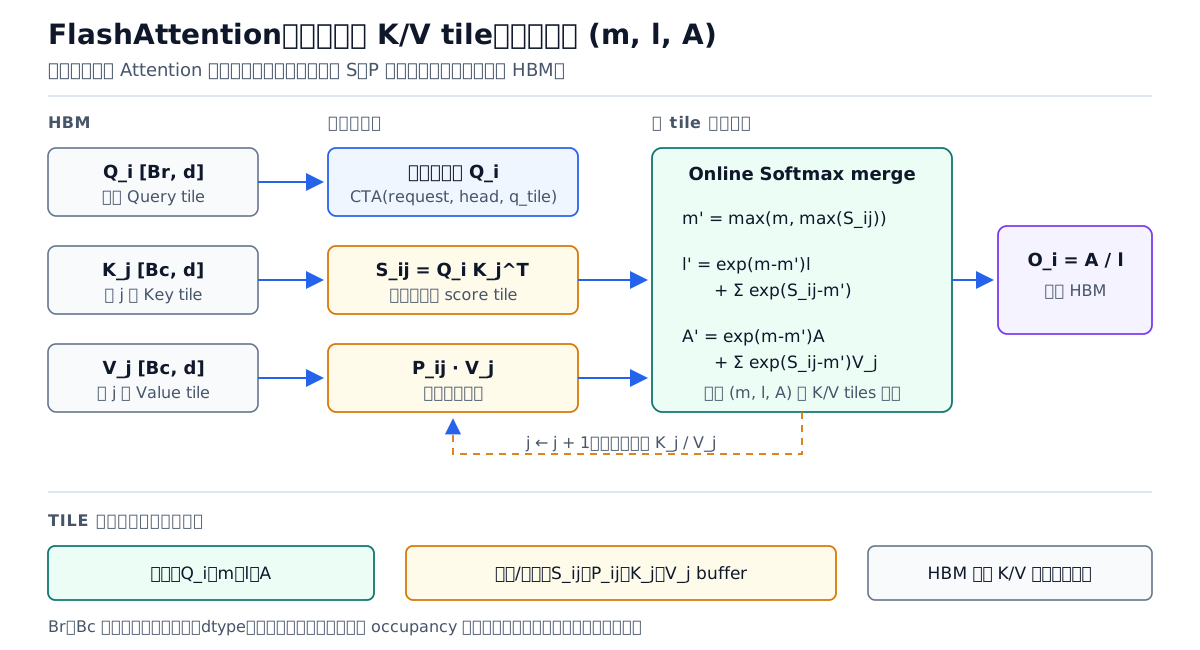
一个常见的逻辑映射是 CTA(request, query_head, query_tile):一个请求会产生多个 CTA;一个 CTA 只能完整驻留在一个 SM;SM 又会动态执行来自不同请求的 CTA。request、CUDA block 和 SM 不是一一对应关系。
Tile 结束后,当前 S/P/K/V tile buffer 可以复用,但 HBM 中的 K/V 数据没有被删除。真正跨 tile 存活的是 Query tile 与 (m,l,A)。Br/Bc 还会同时受到以下因素限制:
- Q、K、V、score、输出累加器所需的片上容量;
- FP32 softmax 状态与输出累加器;
- 双缓冲、流水线和矩阵指令的对齐要求;
- register pressure、shared memory/VMEM bank 与 occupancy。
3. PagedAttention:虚拟内存管理
3.1 Block Table 机制
PagedAttention 把 KV Cache 切成固定 token 数的物理块,只在序列增长时按需分配。设 block size 为 B,请求内 token 位置为 t:
在最简单的单 KV Cache group、单 DCP rank 情况下:
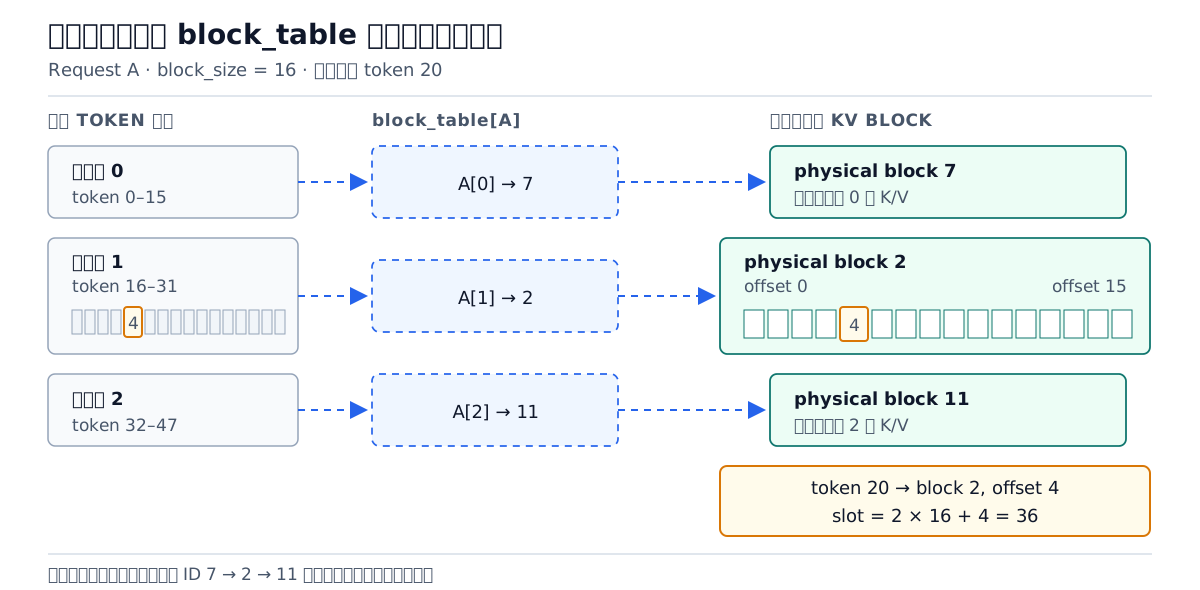
图中 B=16、block_table=[7,2,11]。token 20 位于逻辑块 1、块内 offset 4,因此映射到物理块 2 的 offset 4,简化 slot 为 36。物理块 ID 不需要连续。
vLLM v0.11.0 中,写地址计算位于 BlockTable.compute_slot_mapping:
1 | block_table_indices = ( |
| 元数据 | 回答的问题 | 粒度 |
|---|---|---|
block_table |
第 i 个逻辑块在哪个物理块? |
按请求维护,随 KV block 分配增长 |
slot_mapping |
本轮新 token 的 K/V 写入哪个 slot? | 按本轮 flattened token batch 构造 |
简化成一句话:slot_mapping 负责写新增 K/V,block_table 负责读历史 K/V。
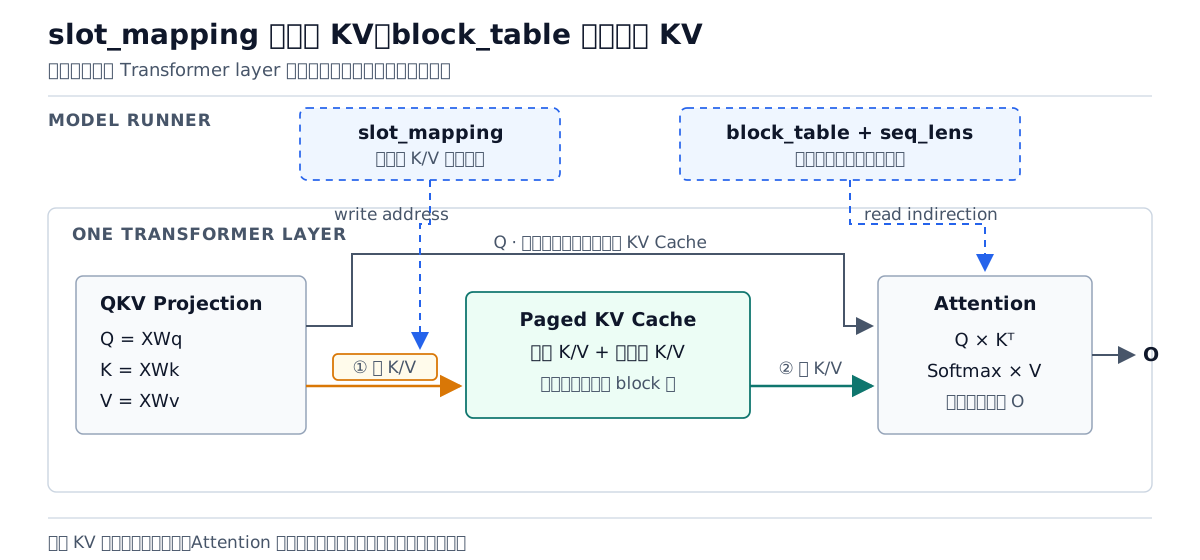
执行链可以概括为:
1 | Scheduler.schedule |
分页不会消除所有浪费:每个活跃序列的尾块仍可能未填满,Block Table 也需要内存。Block size 是尾块浪费、映射表大小与 kernel 访问效率之间的折中。
3.2 CUDA Kernel 实现细节
vLLM 可以选择 FlashAttention、FlashInfer、Triton 等 backend;下面分析的是 custom PagedAttention decode kernel。它非常适合观察 Block Table 如何进入 CUDA,但源码中存在这条路径,不代表任意 NVIDIA V1 配置都会默认使用它。
1 | PagedAttention.forward_decode |
下面的代码按执行链截取,省略模板声明、部分外层循环和 Block Sparse 分支;有些片段从循环中间开始或结束,不能独立编译。每段后的说明负责补足数据布局、线程协作和缺失上下文。
3.2.1 Q、K/V Cache 的物理布局
1 | const scalar_t* __restrict__ q, // [num_seqs, num_heads, head_size] |
K Cache 形状为 [num_blocks, num_kv_heads, head_size/x, block_size, x],V Cache 为 [num_blocks, num_kv_heads, head_size, block_size]。其中:
x = 16 / sizeof(cache_t),K 最内层x个元素合计 16 bytes;- thread group 根据
scalar_t和THREAD_GROUP_SIZE决定计算向量VEC_SIZE; offset1/offset2把计算向量映射到 K Cache 的最内层布局;- FP8 KV Cache 需要先加载量化向量,再按 scale 转换为计算向量。
K/V 排布不同来自 kernel 的访问模式:QK 点积更适合按 head dimension 向量化读取 K;P·V 则沿 token 权重累加每个输出维度。
3.2.2 协作加载 Query
1 | const scalar_t* q_ptr = q + seq_idx * q_stride + head_idx * HEAD_SIZE; |
q_ptr 定位 (sequence, query head)。CTA 内多个 thread groups 分工填充同一份 shared q_vecs;组内线程通过 thread_group_offset 加载不同 head-dimension 片段,__syncthreads() 后由整个 CTA 重用。代码末尾停在一个未完整展示的 TODO 注释处,完整同步优化需查看链接源码。
3.2.3 定位 Block Table
1 | const int* block_table = block_tables + seq_idx * max_num_blocks_per_seq; |
seq_idx * max_num_blocks_per_seq 选择当前请求的 Block Table 行。逻辑 block_idx 到物理块的读取发生在后续循环:
1 | const int64_t physical_block_number = |
这就是 block_table[request][logical_block] → physical_block 在 CUDA 中的落点。
3.2.4 分页读取 K 并计算 QK
1 | for (int j = 0; j < NUM_VECS_PER_THREAD; j++) { |
关键步骤是:
physical_block_number、kv_head_idx和physical_block_offset确定 K 的物理地址;KV_DTYPE == kAuto时直接加载;其他分支把 FP8Quant_vec按k_scale转成计算向量;Qk_dot在线程组内完成点积归约;- ALiBi bias 在缩放后的 QK 上累加;
- 超出
seq_len的尾块位置写 0,且不更新最大值。
片段末尾的 #pragma unroll 属于随后 max reduction 的循环提示。
3.2.5 Max Reduction
1 | qk_max = lane < NUM_WARPS ? red_smem[lane] : -FLT_MAX; |
该片段只展示跨 warp 阶段读取 red_smem 与广播结果。完整流程是:thread group 局部最大值 → warp 内 shuffle reduction → warp leader 写 shared memory → 跨 warp reduction → 广播 block-wide qk_max。V1 的处理范围是完整序列,V2 是当前 partition。
3.2.6 稳定 Softmax
1 | // Get the sum of the exp values. |
先计算 exp(logit - qk_max),再用 block_sum 汇总指数和,最后乘 1/(exp_sum+1e-6) 完成归一化。这里会保存当前处理范围内的全部 logits,再统一做 max、sum-exp 和归一化;它不是 FlashAttention 按 K/V tile 持续维护 (m,l,A) 的实现。
3.2.7 保存 V2 Partition 统计量
1 | float* max_logits_ptr = max_logits + |
真实源码在 USE_PARTITIONING && thread_idx == 0 条件内写入。每个 partition 保存 qk_max 与 exp_sum,供第二个 kernel 做跨 partition 稳定归并;V1 不需要这组临时 Tensor。
3.2.8 读取 V 并累加输出
1 | for (int i = 0; i < NUM_ROWS_PER_THREAD; i++) { |
这一段关注尾块保护与 dot(logits_vec, v_vec)。在它之前,kernel 已经:
- 根据
physical_block_number与 KV head 定位 V block; - 构造当前 token 范围的
logits_vec; - 按
KV_DTYPE直接加载 V,或完成 FP8 scale conversion。
最后一个 KV block 可能未填满,因此上下文之外的 V 元素必须显式清零。否则未使用 slot 中的脏数据或 NaN 可能污染累加结果。
3.2.9 V2 跨 Partition 归并
代码第一行
paged_attention_v2_reduce_kernel:是用于标识片段的伪标签,不是合法 C++;整个代码块从真实 reduce kernel 的中段开始,不能独立编译。下面只解释跨 partition 的归并逻辑。
1 | paged_attention_v2_reduce_kernel: |
该片段从最大值广播后的中间位置开始。完整 reduce kernel 会先求所有 partitions 的全局最大值,再把局部指数和缩放到同一基准:
最后还会按相同权重合并 tmp_out。这属于跨 partition 的稳定归并,不是 FlashAttention 跨 K/V tile 的完整 online-softmax 流程。
3.3 V1 vs V2 对比
V1 Engine 是
vllm/v1/...的引擎架构;PagedAttention V1/V2 是 custom decode kernel 的两个执行方案,两组名称没有版本对应关系。
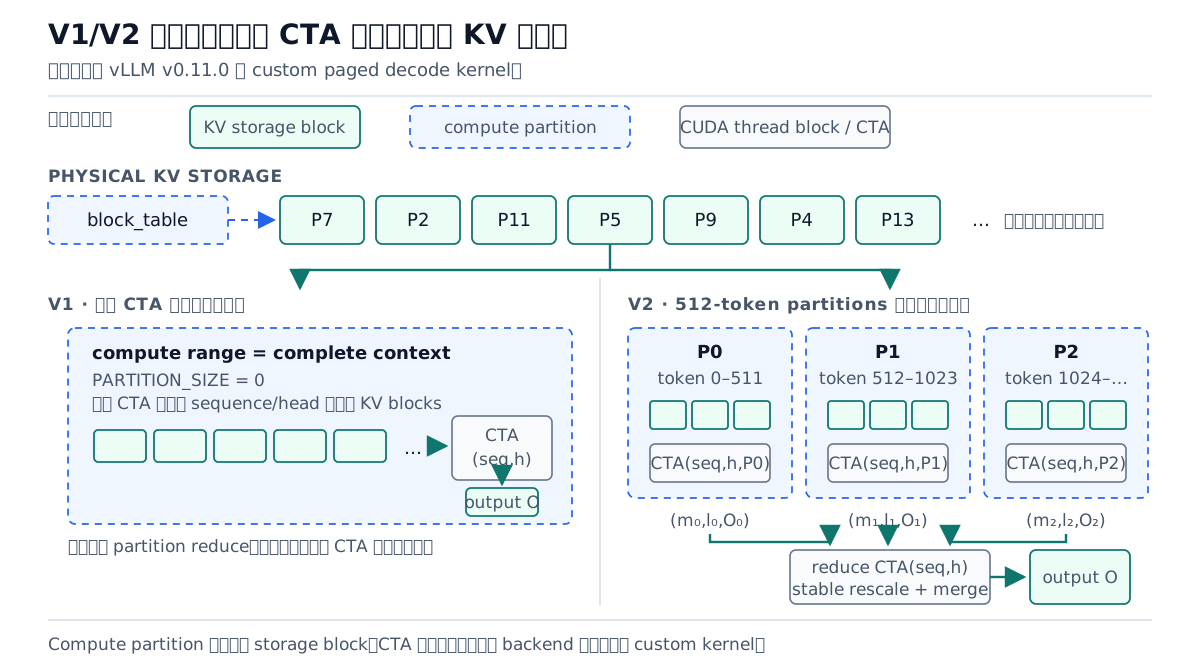
| 维度 | PagedAttention V1 | PagedAttention V2 |
|---|---|---|
| CTA grid | (num_heads, num_seqs, 1) |
增加 partition 维 |
| 单个 CTA 的上下文范围 | 完整序列 | 一个 compute partition |
| 临时结果 | 直接输出 | tmp_out、max_logits、exp_sums |
| 第二个 kernel | 不需要 | paged_attention_v2_reduce_kernel |
vLLM v0.11.0 默认 partition size 为 512 tokens。V2 通过增加 CUDA blocks 提高长序列或小 batch 下的并行度,但需要额外临时 Tensor 和一次 reduce kernel。
该版本的选择条件是:
1 | use_v1 = ( |
满足条件时使用 V1,否则使用 V2。这是 v0.11.0 的启发式,不是 PagedAttention 的通用定义。
4. Prefix Caching:减少重复计算
4.1 核心机制
PagedAttention 解决“一个逻辑块放在哪里”;Prefix Caching 进一步解决“不同请求能否共同引用已经计算好的同一物理块”。
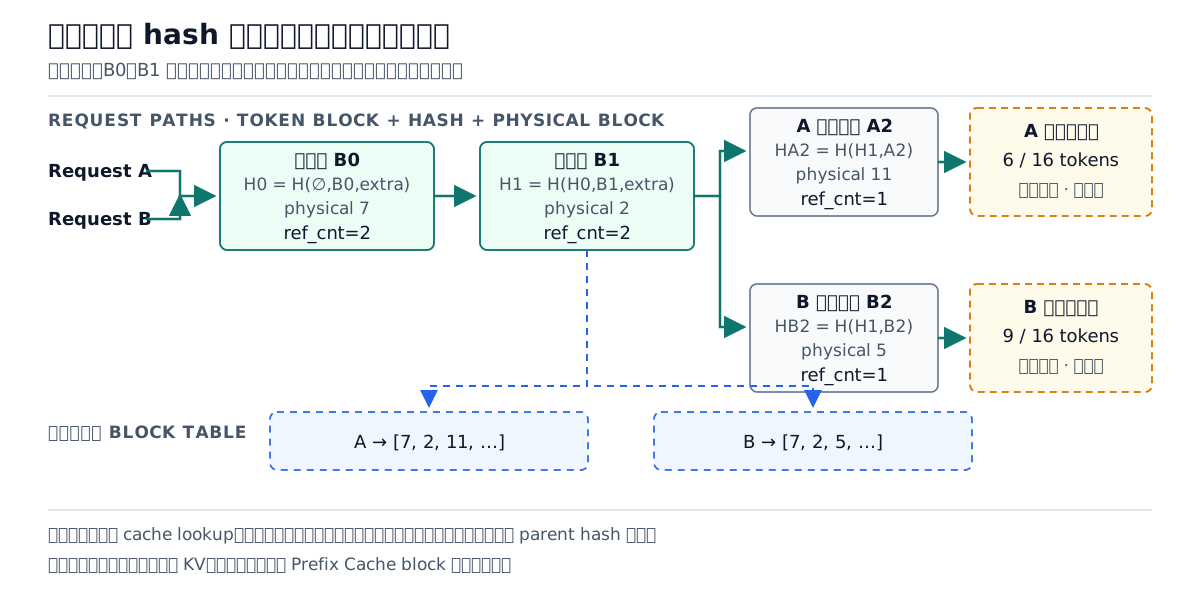
图中共享成立的前提是:相同完整 block 已由较早请求计算并提交。vLLM v0.11.0 在新 block 插入 cache 时不做去重,因此两个请求在同一轮首次生成相同完整 block,并不保证立即指向同一个 physical block;后续请求通过 cache lookup 才可能复用已经缓存的实例。完整边界见 block_pool.py:L30-L39。
vLLM 为完整 token block 构造链式 hash:
以下教学片段省略了完整函数签名、类型上下文和函数定义末尾的冒号,不能直接运行;vLLM
v0.11.0的完整实现见kv_cache_utils.py:L547-L573。
1 | def hash_block_tokens() |
parent_block_hash 把 causal prefix 纳入当前块身份。即使中间某一块 token 完全相同,只要前面的上下文不同,就不能复用相同 KV;第 i 个块 miss 后,后续 hash 链也不能作为连续前缀继续命中。extra_keys 还可能包含多模态内容标识、LoRA ID 或 cache salt。
只有完整且可确认的 token block 才适合作为普通 Prefix Cache block。未填满尾块、可能被 speculative decoding 拒绝的 token,都不能提前提交为稳定 cache。
命中一个仍在 free queue 中的 block 时,touch() 会先把它移出淘汰候选队列,再增加引用计数:
1 | def touch(self, blocks: tuple[list[KVCacheBlock], ...]) -> None: |
请求释放引用时,free_blocks() 递减计数,并把归零且非 null 的 block 追加到 free queue:
1 | def free_blocks(self, ordered_blocks: Iterable[KVCacheBlock]) -> None: |
ref_cnt=0 不代表数据立即清零,只代表 block 可以被重新分配或淘汰;在尚未覆盖前,如果 hash 再次命中,touch() 可以把它取回。free queue 的次序与 block 的最近使用状态共同形成 LRU 风格的淘汰基础。
即使 Prompt 全部命中,也必须保留产生 logits 所需的计算。vLLM 至少需要重算最后一个 token;受 block 对齐限制,某些路径还会回退一个完整块。
4.2 实测数据(探索性观测)
下面是一组探索性端到端观测:
| 配置 | 第一轮(截图标注“冷启动”) | 第二轮(截图标注“热缓存”) | 本配置第一轮 / 第二轮(加速比) | 第二轮相对 OFF |
|---|---|---|---|---|
| Prefix Cache OFF | 11.55 s | 11.53 s | 1.00× | 基准 |
| Prefix Cache ON | 7.83 s | 7.66 s | 1.02× | 约 1.51× |
查看 Prefix Cache 运行截图
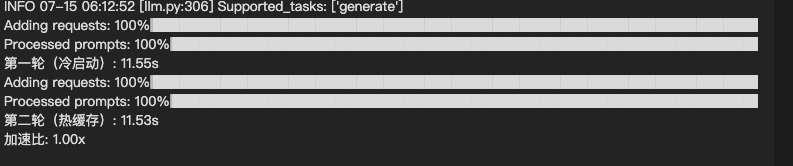
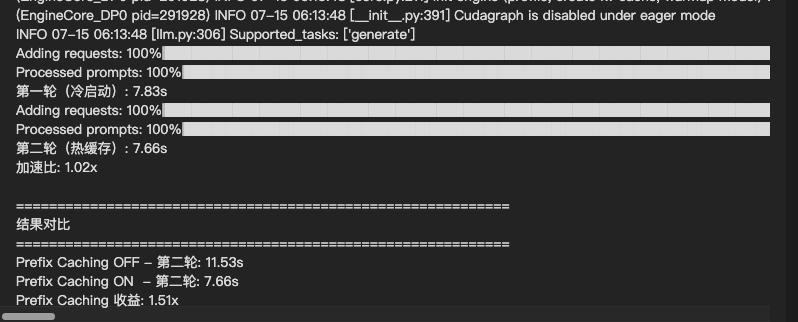
这组数据没有记录 num_cached_tokens、稳定 TTFT、模型 warmup 和完整运行参数,因此只能说明当时的 ON 配置端到端时间更短,不能把全部差异归因于 Prefix Cache。
更可靠的实验应固定 Prompt 与输出长度,用无关请求完成模型 warmup,再执行 cold → repeated-prefix 对照;同时记录命中 token 数,并以 max_tokens=1 的 TTFT 为主要指标,尽量隔离后续 Decode。
4.3 适用场景
| 场景 | Prefix Cache 价值 | 关键条件 |
|---|---|---|
| 多轮对话 | 复用历史对话前缀 | 新一轮输入必须以前一轮完整历史开头 |
| 批量任务 | 复用模板或固定指令 | 公共前缀至少形成一个完整 block |
| 相同 system prompt | 降低重复 Prefill | hash 的 extra keys 必须兼容 |
| 每个请求前缀都不同 | 通常收益很小 | 几乎没有连续 prefix hit |
Prefix Caching 的收益取决于命中长度、block size、cache 压力和到达顺序;“开关已启用”不等于当前请求一定命中。
5. Chunked Prefill:混合调度
5.1 问题:长 Prompt 的饥饿
Prefill 需要处理全部 Prompt tokens。若一个 32K Prompt 一次性占用整轮 token budget 和 GPU 时间,已经进入 Decode 的短请求就可能长时间拿不到下一个 token,表现为 TTFT/ITL 尾延迟恶化。
Chunked Prefill 把长 Prompt 拆成多个 scheduler iterations。每轮只调度一段 Prompt tokens,使同轮尚未消耗的共享 budget 有机会容纳其他请求;是否能容纳、以及实际剩余多少,取决于请求处理顺序、总 token budget 和 long_prefill_token_threshold。它优化的是服务公平性与 head-of-line blocking,不会减少长 Prompt 自身必须完成的 Attention 计算量。
5.2 Chunked Prefill 方案
vLLM V1 Scheduler 不维护两条互斥的 Prefill/Decode phase;它在一份共享 token budget 内为每个请求计算 num_new_tokens:
1 | num_new_tokens = (request.num_tokens_with_spec + |
代码中依次考虑:请求尚未计算的 token、long_prefill_token_threshold、当前 token_budget,以及 speculative decoding 下不能超过 max_model_len-1 的位置限制。
当请求成功进入本轮调度后,消耗的 token 数从共享 budget 扣除:
1 | token_budget -= num_new_tokens |
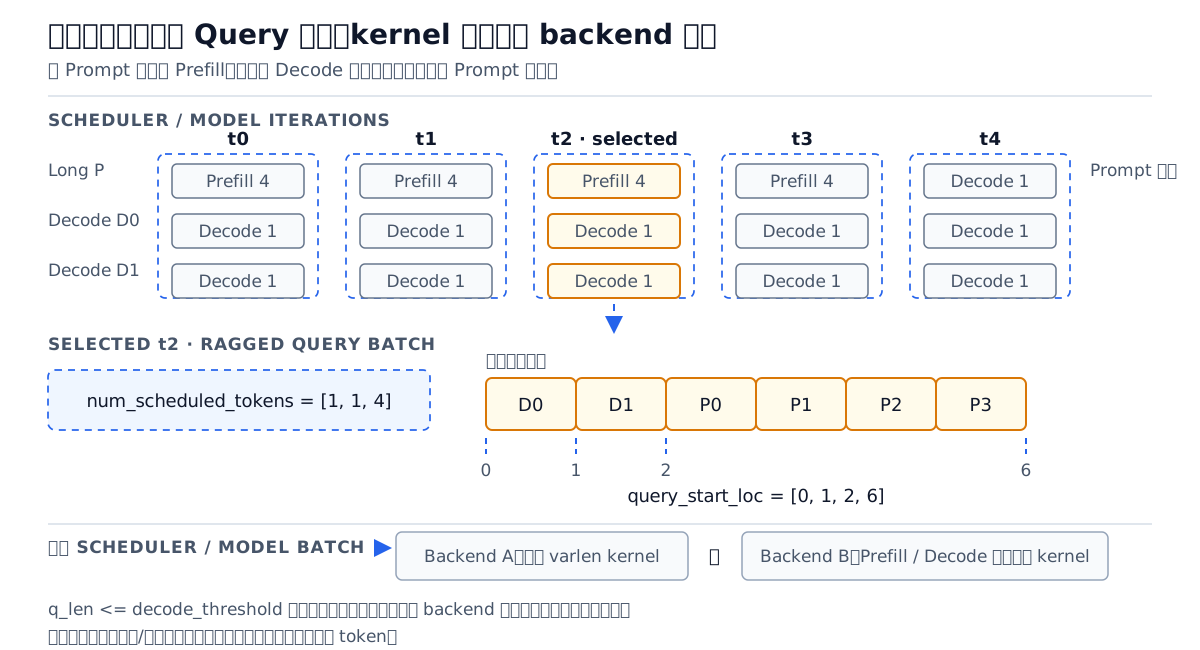
例如一轮中两个 Decode 请求各得到 1 token,长 Prompt 得到 4-token chunk:
1 | num_scheduled_tokens = [1, 1, 4] |
相邻 query_start_loc 的差就是本轮各请求的 q_len。vLLM v0.11.0 中,真正根据 q_len 划分计算形态的是 split_decodes_and_prefills:
1 | query_lens = query_start_loc[1:] - query_start_loc[:-1] |
默认 decode_threshold=1,所以普通路径中 q_len <= 1 会被归为 decode-like;如果 require_uniform=True,则只有与 batch 首个 Query 长度相同的连续请求留在 decode 侧。
同一文件中的另一个 helper 会在模型执行前按本轮调度 token 数重排 batch,把 decode-like 请求移到前面。下面是它的局部逻辑:
该局部片段省略了
decodes/prefills初始化、batch move 和return,不能直接运行;完整实现见utils.py:L774-L834。
1 | def reorder_batch_to_split_decodes_and_prefills( |
展示的 reorder_batch_to_split_decodes_and_prefills 直接读取 scheduler_output.num_scheduled_tokens,并不读取 query_start_loc;q_len 判断属于前面的 split_decodes_and_prefills。两者的默认 threshold 都是 1,但 backend 可以覆盖。这里的 decode/prefill 只描述 attention backend 眼中的本轮计算形态,不是 Scheduler 为请求保存的永久状态。
同一 scheduler/model batch 也不保证进入同一个 Attention kernel:
- FlashAttention 可以用一次 varlen kernel 处理混合 Query 长度;
- FlashInfer 可以在同一个 layer forward 内分别调用 Prefill 与 Decode wrapper;
- 其他 backend 也可能先重排,再走不同 kernel。
Paged KV 让分段调度真正高效:前一个 chunk 的 K/V 留在已分配物理块中;下一轮只增量写入新 K/V,并通过 Block Table 读取完整历史,不需要拼接整段缓存。
5.3 实测效果(探索性观测)
截图中的实验汇总如下。ON 组显式设置 max_num_batched_tokens=2048、long_prefill_token_threshold=1024;OFF 组的 token budget 为 131072。
| 实验 | 配置 | Long TTFT | Long 总延迟 | Short TTFT median | Short TTFT max | Short latency median | Short latency max | 现象 |
|---|---|---|---|---|---|---|---|---|
| 实验 1 | Chunked Prefill ON,budget 2048,threshold 1024 | 25.89 s | 26.55 s | 0.415 s | 0.688 s | 0.416 s | 0.691 s | 短请求基本都能在 Long Prefill 期间插入执行 |
| 实验 2 | Chunked Prefill OFF,budget 131072 | 26.74 s | 27.45 s | 25.597 s | 26.437 s | 25.602 s | 26.441 s | 短请求基本被 Long Prefill 阻塞到 Long 首 token 附近 |
截图给出的逐指标对比保留了更多小数位:
| 指标 | Chunked ON + threshold 1024 | Chunked OFF | 截图中的改善幅度 |
|---|---|---|---|
| Short TTFT median | 0.415 s | 25.597 s | 约 61.7× 更低 |
| Short TTFT max | 0.688 s | 26.437 s | 约 38.4× 更低 |
| Short latency median | 0.416 s | 25.602 s | 约 61.5× 更低 |
| Short latency max | 0.691 s | 26.441 s | 约 38.3× 更低 |
| Long TTFT | 25.895 s | 26.738 s | ON 略快约 0.84 s |
| Long 总延迟 | 26.555 s | 27.452 s | ON 略快约 0.90 s |
按请求时间线统计,短请求首 token 的分布为:
| 实验 | Short 请求首 token 分布 | Long first token 时间 | 结论 |
|---|---|---|---|
| Chunked ON + threshold 1024 | short-0 至 short-19 都在约 0.95–2.59 s 拿到首 token |
26.04 s | 短请求成功穿插到 Long Prefill 中 |
| Chunked OFF | 除 short-0 外,大部分 Short 请求在约 26.85–26.96 s 拿到首 token |
26.87 s | 短请求被 Long Prefill 阻塞,直到 Long Prefill 结束 |
查看 Chunked Prefill 延迟截图
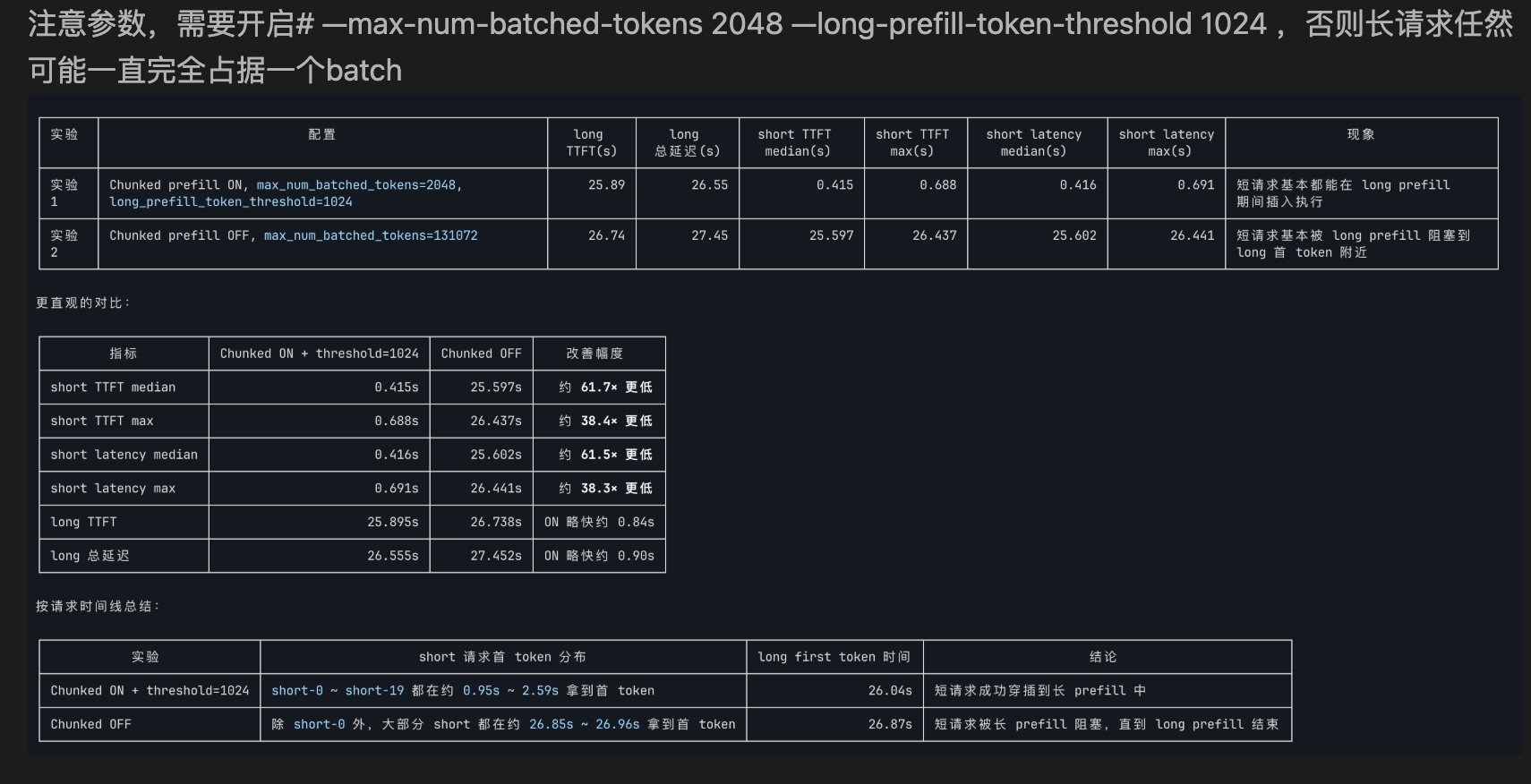
两组观测相差约 61.7×,但实验同时修改了 Chunked Prefill 标签和 scheduler token budget,而且没有记录 engine 版本与 effective config,不能当作 Chunked Prefill 单变量加速比。
还有一个明确的版本边界:vLLM v0.11.0 在常见 GPU/TPU 的 V1 非 pooling 路径中会启用 Chunked Prefill;POWER、ARM 和 s390x CPU 是平台例外,V1 会再次将其禁用。因此表中的 OFF 标签不能直接视为当前常见 GPU V1 路径的合法对照,它可能来自其他 engine、版本或例外平台。
Chunk 越小并不必然越好:
- 小 chunk 通常改善短请求 TTFT/ITL 和调度公平性;
- 过小会增加 scheduler iterations、kernel launch 和长 Prompt 完成时间;
- 大 chunk 提高单轮计算量,却可能重新放大短请求尾延迟。
应固定真实到达时间线,扫描 max_num_batched_tokens 与 long_prefill_token_threshold,同时报告短请求 TTFT/ITL P50/P95/P99 和长请求吞吐。
6. Sampling:从 Logits 到 Token
6.1 常见采样方法
最后一层 hidden state 经 LM Head 投影为词表 logits,Sampler 才开始工作:
1 | Transformer → LM Head → logits → Sampler → sampled_token_ids |
Greedy Sampling 直接选择最大 logit:
1 | next_token = torch.argmax(logits, dim=-1) |
Temperature、Top-k 和 Top-p 的最小参数表示如下:
1 | logits = logits / temperature |
这里的 temperature=0 是 Greedy 的接口语义,不是实际除数。vLLM v0.11.0 把 <1e-5 视为 Greedy;混合 batch 在缩放前会把这些行的 temperature 临时替换为 1.0,随后再用 torch.where 选择 Greedy 结果,因此不会执行 logits / 0。实现见 sampler.py:L127-L195。
1 | top_k = 5 |
1 | top_p = 0.9 |
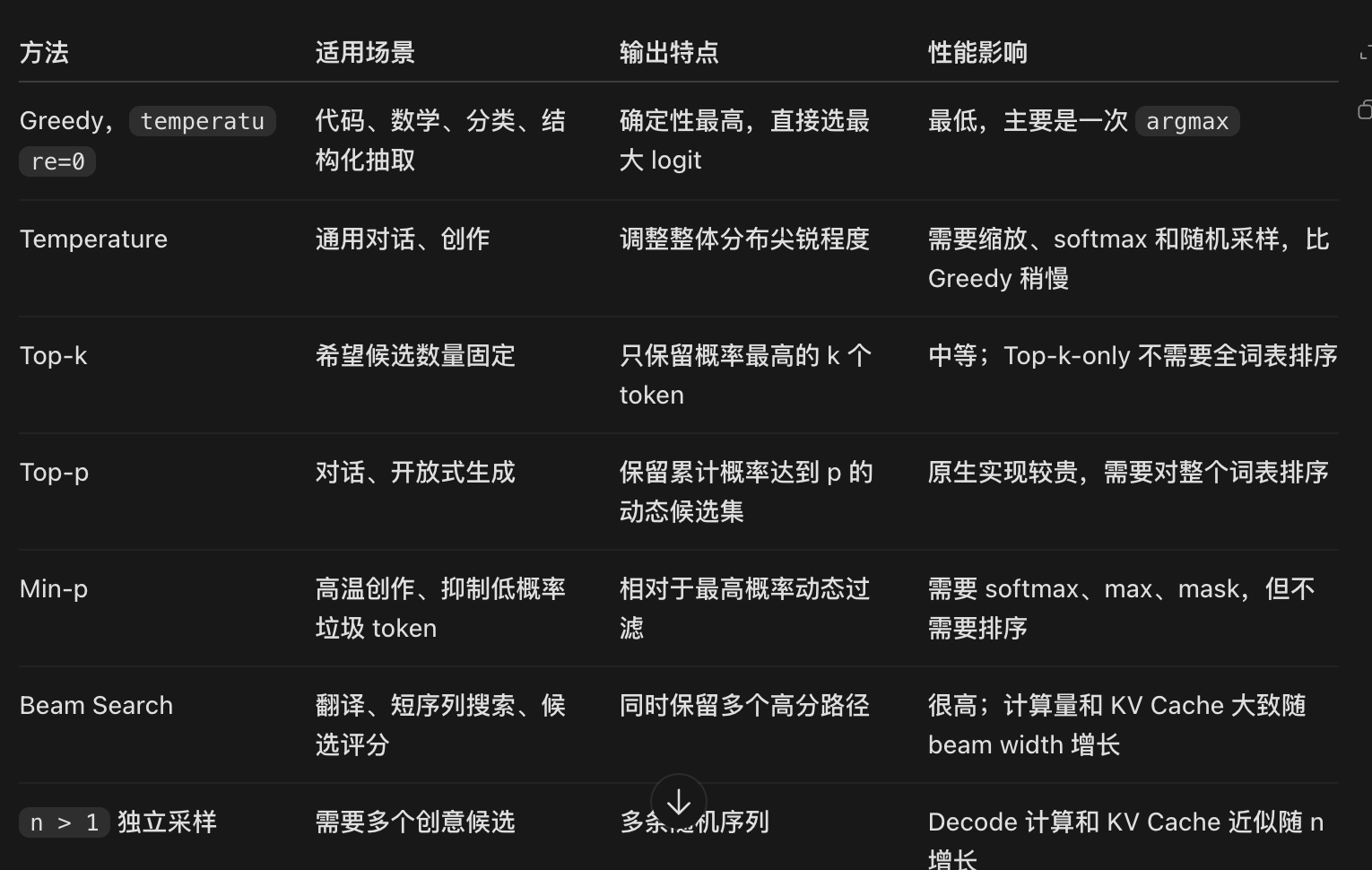
| 方法 | 适用场景 | 输出特点 | 性能影响 |
|---|---|---|---|
Greedy,temperature=0 |
代码、数学、分类、结构化抽取 | 确定性最高,直接选择最大 logit | 最低,主要是一次 argmax |
| Temperature | 通用对话、创作 | 调整整体分布的尖锐程度 | 需要缩放、softmax 和随机采样,比 Greedy 稍慢 |
| Top-k | 希望候选数量固定 | 只保留概率最高的 k 个 token |
中等;Top-k-only 不需要全词表排序 |
| Top-p | 对话、开放式生成 | 保留累计概率达到 p 的动态候选集 |
原生实现较贵,需要对整个词表排序 |
| Min-p | 高温创作、抑制低概率长尾 token | 相对于最高概率动态过滤 | 需要 softmax、max 和 mask,但不需要排序 |
| Beam Search | 翻译、短序列搜索、候选评分 | 同时保留多个高分路径 | 很高;计算量和 KV Cache 大致随 beam width 增长 |
n>1 独立采样 |
需要多个创意候选 | 生成多条随机序列 | Decode 计算和 KV Cache 近似随 n 增长 |
参数没有脱离任务的全局最优值。确定性任务通常从 Greedy 开始;开放式对话常用适中的 Temperature + Top-p;高温导致长尾候选过多时,可以评估 Min-p。
6.2 性能影响
采样通常小于大模型 forward 的成本,但在大 batch、大词表、小模型或请求大量 logprobs 时可能成为明显开销。
vLLM v0.11.0 的 batch 路径有三种:
- 全 Greedy:计算
argmax后提前返回; - 全 Random:跳过 Greedy,只计算随机路径;
- Greedy/Random 混合:两条结果都计算,再用
torch.where按请求选择。
不同过滤器的主要额外工作也不同:
| 路径 | 主要工作 | 性能边界 |
|---|---|---|
| Greedy | 全词表 argmax |
通常最轻,但仍扫描 vocab |
| Temperature | 逐元素缩放 | 后续仍需概率化和随机采样 |
| Native Top-k only | topk |
不必完整排序全词表 |
| Native Top-p | sort、softmax、cumsum、scatter | 大词表时更明显 |
| Min-p | 全词表 softmax、amax、阈值 mask,之后仍随机采样 | 高温或大词表时会增加概率化与逐元素处理开销 |
| FlashInfer rejection sampling | 避免 native 全排序 | 有版本、seed、logprobs mode、环境变量限制,并包含 CPU–GPU 同步 |
logprobs=N 常比小幅调整 top_p 更值得关注:默认 raw-logprobs 路径会计算 FP32 log_softmax,随后还要做 top-k、sampled-token gather 和 rank 计算。
Beam Search 和 n>1 都会增加活跃请求数、模型 forward 工作量和峰值 KV 占用。实际倍率受 Prefix Cache、候选提前结束和 scheduler batching 影响,不能简单写成严格的 W× 或 n×。
查看 Sampling 方法截图
7. 长上下文综合优化
7.1 32K Tokens 场景
长上下文没有单一“最佳开关”。首先要区分负载:
- 单文档问答:Prompt 很长,但公共前缀较少。主要矛盾是 Prefill 计算、KV 容量和短请求排队;Paged KV + 合理 token budget 更重要。
- 多轮对话:每轮都携带之前的完整历史。若历史形成稳定完整 blocks,Prefix Cache 可以复用大量 causal prefix;Paged KV 负责继续追加新 K/V。
以前述 32 层、8 KV heads、head_dim=128、BF16 为例,32K KV Cache 约 4 GiB。并发容量还要考虑模型权重、activation workspace、CUDA Graph、临时 partition buffers 和 allocator 对齐,不能只用 HBM 总容量除以 4 GiB。
| 场景 | 首要矛盾 | 重点机制 | 关键指标 |
|---|---|---|---|
| 单个长文档 | Prefill 计算量、KV 容量 | Paged KV、Chunked Prefill | TTFT、吞吐、可用 KV blocks、抢占 |
| 公共模板批处理 | 重复前缀计算 | Prefix Cache | 命中 token、TTFT、block 淘汰 |
| 多轮对话 | 历史前缀重复、尾部持续增长 | Prefix Cache + Paged KV | 命中长度、ITL、端到端延迟 |
| 长 Prefill + 短 Decode | head-of-line blocking | Chunked Prefill | 短请求 TTFT/ITL P95/P99、长请求吞吐 |
7.2 优化组合效果(探索性观测)
| 配置 | 单文档 | 多轮对话 | 截图中的显存 | 单文档 / 多轮相对 Baseline |
|---|---|---|---|---|
| Baseline | 16.39 s | 29.69 s | 0.00 GB | 1.00× / 1.00× |
| Chunked Prefill,budget 2048 | 16.36 s | 29.76 s | 0.00 GB | 1.00× / 1.00× |
| Prefix Cache | 16.44 s | 13.28 s | 0.00 GB | 1.00× / 2.24× |
| Prefix Cache + Chunked,budget 2048 | 16.41 s | 13.35 s | 0.00 GB | 1.00× / 2.22× |
| Prefix Cache + Chunked,budget 4096 | 16.44 s | 13.27 s | 0.00 GB | 1.00× / 2.24× |
查看长上下文组合截图
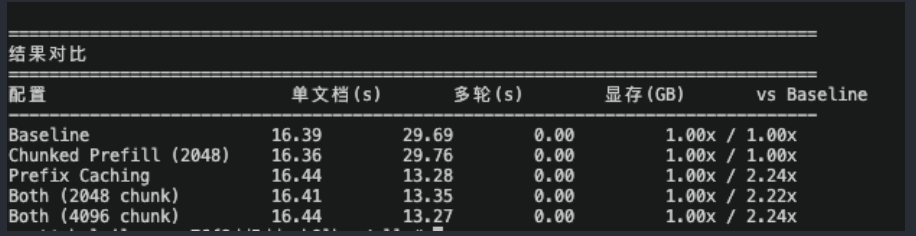
观测方向与机制预期兼容:若该次单文档输入没有可复用前缀,几组配置差异很小是合理现象;多轮对话在 Prefix Cache 标签下时间更短。但实验缺少 num_cached_tokens、控制变量和完整运行配置,不能据此确认实际命中,也不能把约 2.24× 的差异当作正式加速比。截图中的显存列为 0.00 GB,同样不能据此得出显存节省结论。
7.3 最佳实践
先确定 SLA,再回放真实 Prompt/输出长度和到达分布。建议按以下顺序调优:
- 验证地址与容量:确认 block size、KV dtype、可用 KV blocks、抢占和重计算;
- 验证 Prefix Cache:记录
num_cached_tokens,区分启用与实际命中; - 扫描 token budget:逐步调整
max_num_batched_tokens,观察 TTFT/ITL 与吞吐; - 限制单个长 Prefill:必要时设置
long_prefill_token_threshold,避免一个请求吞掉大部分预算; - 控制 batch 上限:
max_num_seqs只是序列数上限,实际并发仍受 token budget 与 KV 容量约束; - 单变量实验:固定 engine 版本、backend、模型、输入和到达时间线,每次只改一个参数。
正式报告至少应包含:
- 模型、dtype、KV dtype、GPU、vLLM commit、Attention backend 与完整启动参数;
- Prompt tokens、公共前缀 tokens、输出 tokens、并发和到达时间线;
- TTFT、ITL、端到端延迟和吞吐的 P50/P95/P99;
- Prefix Cache 命中 token、GPU KV blocks、抢占/重计算次数;
- cold start、warmup、重复次数与测量区间。
PagedAttention 的核心不是把 Attention 公式改成“分页公式”,而是建立稳定的 KV 地址抽象:
1 | 逻辑 token 位置 |
在这层抽象之上,FlashAttention 优化 IO,Prefix Cache 复用公共前缀,Chunked Prefill 改善调度公平性,Sampling 决定 logits 之后的候选过滤与选择。只有把存储、计算、调度和采样分层观察,才能正确解释长上下文服务的容量、吞吐与尾延迟。
参考资料
- FlashAttention: Fast and Memory-Efficient Exact Attention with IO-Awareness
- Efficient Memory Management for Large Language Model Serving with PagedAttention
- NVIDIA Ampere GPU Architecture Tuning Guide
- V1 Scheduler:统一 token budget
- EngineArgs:V1 Chunked Prefill 版本边界
- GPU Model Runner:ragged batch 与 Attention metadata
- BlockTable:slot_mapping 计算
- Attention backend utilities:q_len 与 decode_threshold
- Prefix Cache hash chain
- Block Pool:引用计数与 free queue
- Custom PagedAttention wrapper 与 V1/V2 选择
- Custom PagedAttention CUDA kernel
- V1 Sampler
- Top-k/Top-p sampler